
SATURDAY, OCTOBER 10, 2026
New World, New Beginnings
7:30 PM | MANSFIELD THEATER, GREAT FALLS
PRE-CONCERT TALK | 6:30 PM | FREE

SEASON SPONSOR
CONCERT SPONSORS


.png)
WHAT'S INTERESTING ABOUT THIS CONCERT
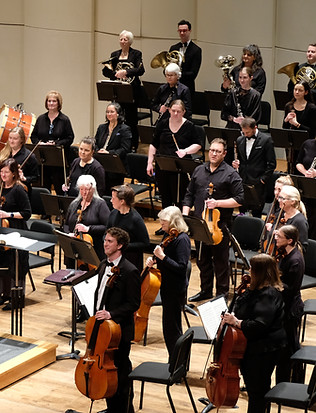
This opening concert of our 2026–27 season marks the start of the inaugural season of our new Music Director, Robert Kahn. It will be your first chance to welcome Robert and speak with him about his plans for our Symphony and community.
Dvořák's 9th Symphony, nicknamed the 'New World Symphony' is one of the most popular symphonies of all time -- and for good reason! It is an easy listen for those newer to the genre, and is incredibly first-timer friendly. Astronaut Neil Armstrong even took a tape recording including the New World Symphony along on the Apollo 11 mission, the first Moon landing, in 1969.
Joining us for Rachmaninoff's Piano Concerto No. 2 is piano virtuoso, Janice Carissa. Janice debuted onstage with the Philadelphia Orchestra at just sixteen, and has only become more impressive since. She studied at both Curtis and Juilliard, and has performed on renowned stages around the world including Sydney Opera House, Carnegie Hall, the United Nations, the Kennedy Center and more.
MUSIC DIRECTOR SPONSORS

SATURDAY
10
OCTOBER, 2026
CONCERT START 7:30
PRE-CONCERT TALK 6:30
DURATION
1 hour, 41 minutes
(includes 20-min. intermission)
EVERYONE BELONGS AT THE SYMPHONY
Clap when you feel it.
Pre-concert talk | 6:30 PM | Free
Enjoy your concession drink at your seat.
Phones on silent are welcome.
Concert Details
_edited.jpg)
LukasAtmaja-06%20(1).jpeg)
ABOUT THE MUSIC
PROGRAM NOTES WRITTEN BY ROBERT KAHN
Written to open his opera The Marriage of Figaro, this sparkling overture launches one of the greatest comic masterpieces ever written. From the first note, the music brims with excitement and anticipation of a marriage between a loving couple: new beginnings. Although none of the opera’s melodies appear in the overture, Mozart captures its very essence: romance, wit, mistaken identities, and delightful chaos.
Based on the controversial play by Pierre Beaumarchais, The Marriage of Figaro tells the story of servants who outsmart their aristocratic employer, Count Almaviva. So politically provocative was the original play that Emperor Joseph II initially banned it, fearing its criticism of the nobility. Mozart and his librettist Lorenzo Da Ponte cleverly softened its political edge, allowing the opera to reach the stage in 1786.
Overture to Le Nozze di Figaro
1786
Wolfgang Amadeus Mozart
1756 -- 1791
4 MINUTES
The overture never pauses to rest. Breathless strings, playful woodwinds, and sudden bursts of energy propel the music forward, perfectly preparing the audience for an evening of comic confusion, romance, and ultimately, reconciliation.
Today, Rachmaninoff’s Second Piano Concerto is among the most celebrated works in the repertoire. Yet its creation followed one of the darkest periods of the composer’s life. The disastrous premiere of his First Symphony in 1897 left the young composer devastated. Crushed by harsh criticism, he fell into a deep depression and was unable to compose for nearly three years. After a heavy dose of therapy, which included hypnosis sessions, Rachmaninoff slowly regained his confidence and set to writing his next piece: Piano Concerto No. 2.
The resulting work is one of extraordinary emotional impact. The concerto begins with a series of solemn piano chords that seem to emerge from darkness before blossoming into one of the most passionate melodies ever written. A deeply lyrical slow movement offers moments of quiet introspection before the exhilarating finale sweeps the work toward its triumphant conclusion. Demanding extraordinary technical brilliance as well as deep emotional commitment, the concerto has remained a favorite of both pianists and audiences for well over a century.
Piano Concerto No. 2
1901
I. Moderato
II. Adagio Sostenuto
III. Allegro Scherzando
Sergei Rachmaninoff
1873 -- 1943
FEATURING GUEST ARTIST
Janice Carissa
PIANO
37 MINUTES
In 1892, Antonín Dvořák left his native Bohemia to become director of the newly established National Conservatory of Music in New York City. Fascinated by the rich musical traditions he encountered in America, Dvořák argued that the nation’s composers should look not to Europe, but to the spirituals, folk songs, and Indigenous music of their own country for inspiration, just as European composers had embraced their own national traditions.
His Symphony No. 9, commissioned by the New York Philharmonic, reflects that vision. Although every melody is Dvořák’s own invention, many are shaped by the rhythms, intervals, and expressive character of African American spirituals and Native American music that he admired. The result is a work that sounds unmistakably American while remaining rooted in the great European symphonic tradition.
Each movement offers a different emotional landscape. The famous Largo has become synonymous with nostalgia and longing, while the exuberant Scherzo draws inspiration from Longfellow’s The Song of Hiawatha.
Symphony No. 9
1893
I. Adagio – Allegro Molto
II. Largo
III. Scherzo: Molto Vivace
IV. Allegro Con Fuoco
Antonín Dvořák
1841 -- 1904
40 MINUTES
The powerful finale unites themes from throughout the symphony, bringing the entire work together in a thrilling conclusion. Since its triumphant premiere at Carnegie Hall in 1893, the New World Symphony has spoken to audiences through themes that remain timeless: discovery, homesickness, hope, and the excitement of new beginnings.